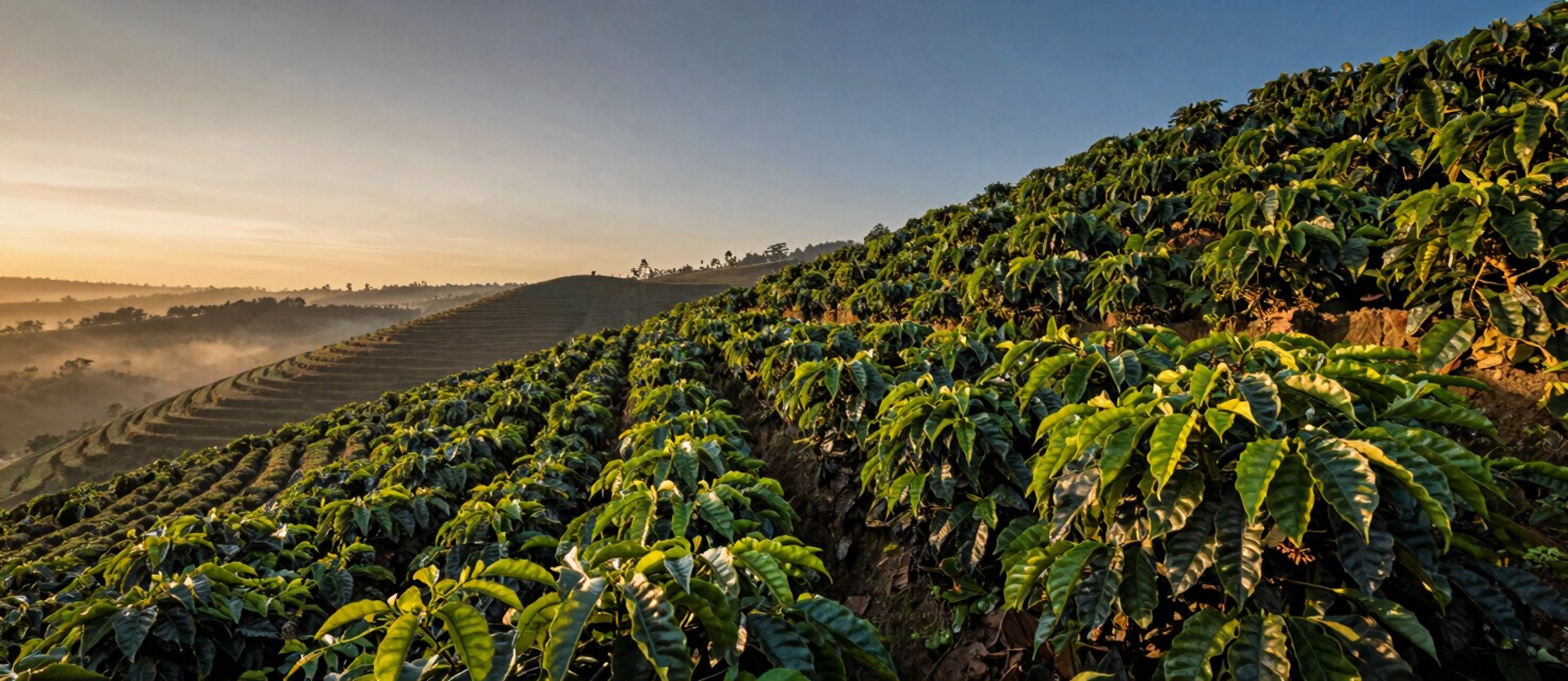
Quality built into the soil before the harvest begins
Every lot we export traces back to a specific elevation band, a named farm, and a documented agronomic practice. The quality guarantee starts here—not at the warehouse.
Elevation, soil, and microclimate — lot by lot
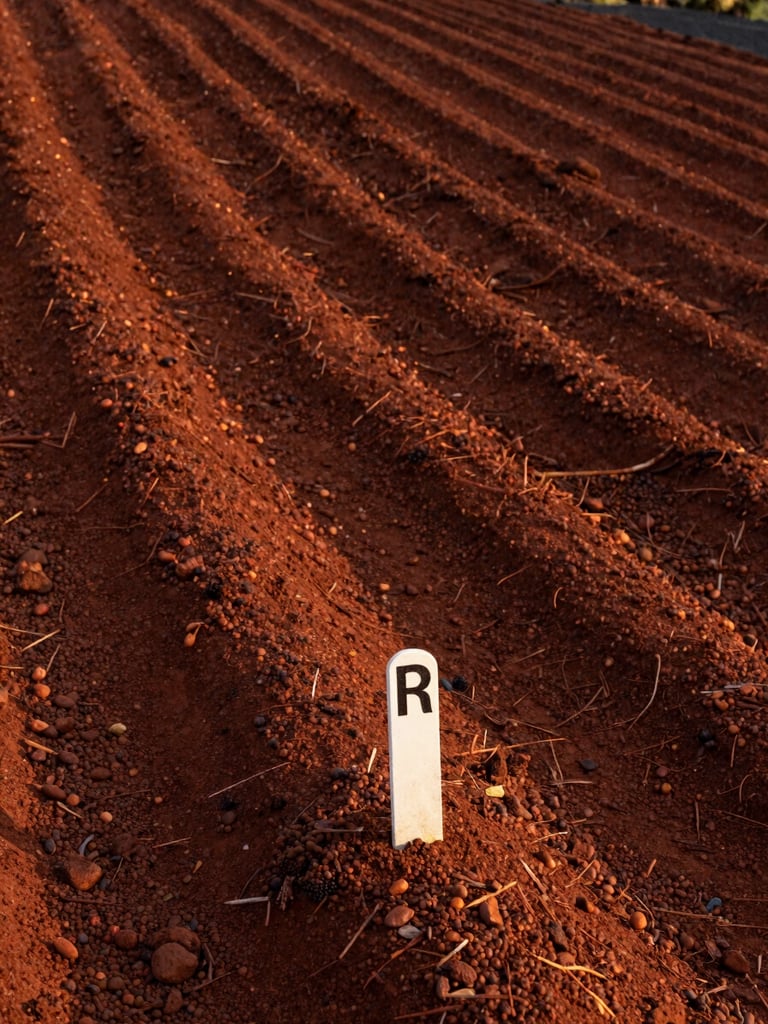
Our farms sit between 1,400 and 2,200 metres on Uganda's equatorial ridge. Volcanic soils, bimodal rainfall, and temperature differentials at altitude concentrate the sugars and acids that define cup character.
Each lot is tagged to its source farm and elevation band before it leaves the field. Buyers receive full traceability data—region, altitude, soil type—tied to every shipment.
1,400–2,200 m elevation range · Volcanic ridge soils · Bimodal growing seasons · Lot-specific traceability documentation
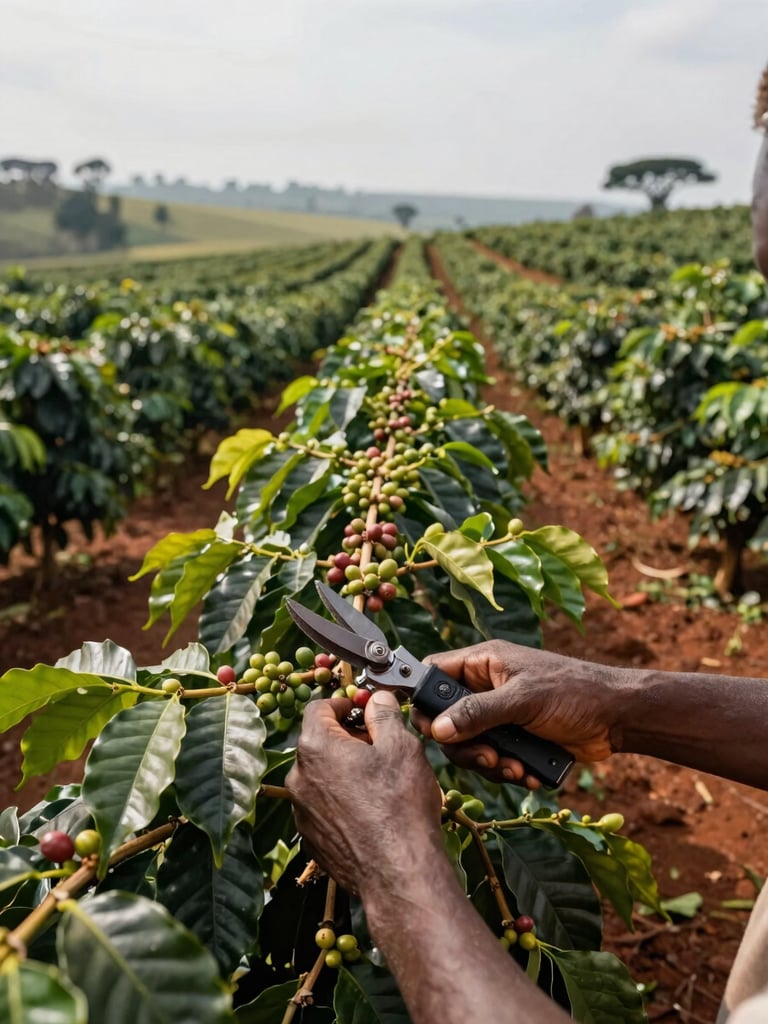
Structural partnerships, not seasonal contracts
We work with smallholder farmers under multi-year agreements that include input access, agronomic guidance, and guaranteed offtake. Stability in the relationship produces stability in the cup.
Plantation development investments—land preparation, shade tree programs, irrigation infrastructure—are Agronova commitments, not farmer obligations. Buyers inherit that long-term investment with every lot.
Better agronomics raise income and cup score together
Our agricultural extension teams work farm-side: soil testing, pruning schedules, post-harvest handling protocols. When farmers apply better practices, yield improves and defect rates drop.
Ready to verify the source behind the lot? We open our cupping room and field records to serious buyers. Start a conversation and we'll schedule a session.
That's not a social programme—it's the mechanism that gives us lot-specific quality control at scale. Q-graders and sustainability officers are welcome to review our field records and cupping data.